- A competitor changes its homepage headline.
- A 30% discount appears for three days.
- A new product category is added to the navigation.
If nobody visits at the right time, the change is easily missed.
What is competitor website monitoring?
Competitor website monitoring tracks public pages over time to detect changes in their content or selected elements. Marketing teams can follow homepage campaigns, headlines, images, calls to action, prices, offers, product launches and navigation.
These changes signal what a competitor is prioritising and how it is trying to influence customers.
The goal is not to monitor every pixel. It is to follow the changes that can inform a marketing decision.
Website monitoring built for the European market
Cookie consent is a practical challenge for using many website monitoring tools that aren't built in Europe.
If a tool cannot interact with the consent layer, it may repeatedly capture the banner or fail to load the relevant content. The result is noisy alerts and screenshots that reveal little about the competitor's marketing.
Rivaler is designed to get past this barrier and capture the experience behind the consent banner. This makes it possible to monitor the campaigns and commercial messages visitors actually encounter.
Rather than being a general-purpose page-change detector, Rivaler is designed specifically for competitor and campaign monitoring.
Monitor the elements that matter
Monitoring an entire website can create too much noise. Footers, recommendations and dynamic content change constantly without telling you much.
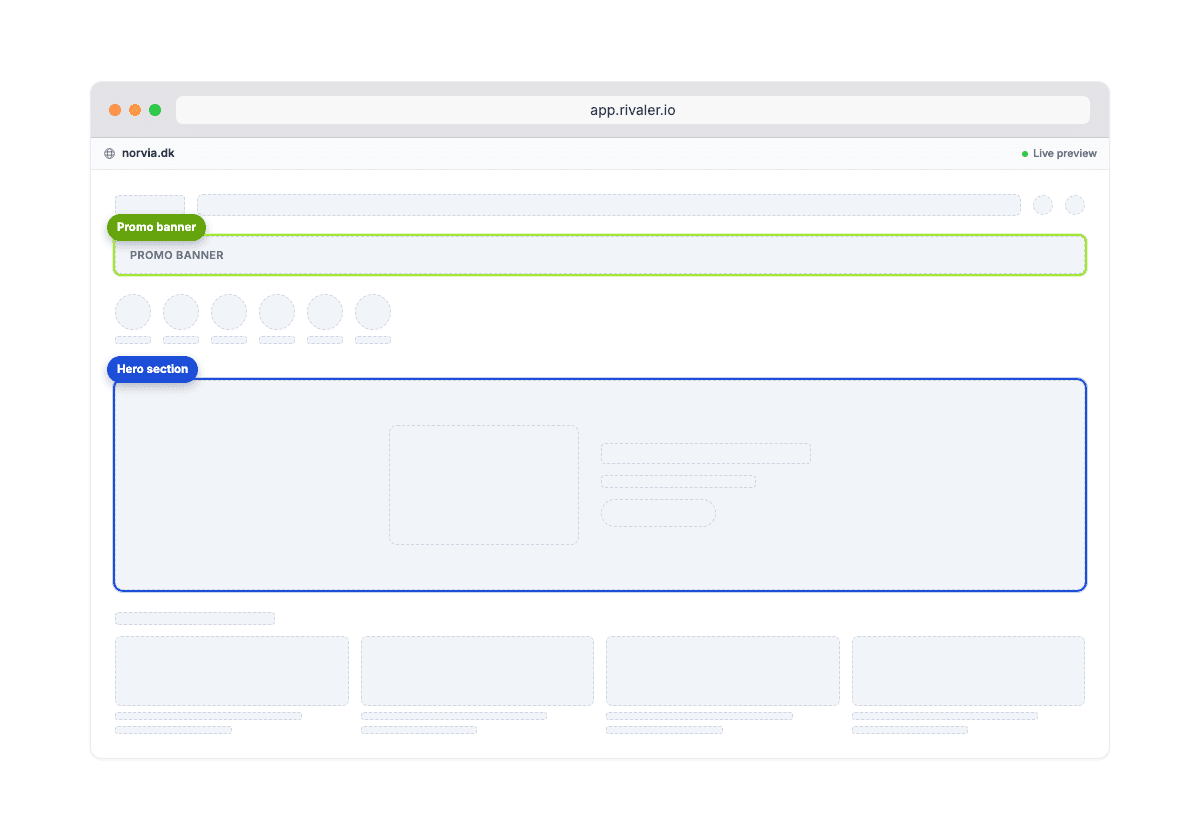
With Rivaler's Website Monitor, you can:
- Enter a competitor's URL.
- Preview the page inside Rivaler.
- Select the entire page or individual elements.
- Name the selected sections and create the monitor.
On a retail homepage, you might select the featured image, campaign headline and promotional badge. On a pricing page, you could focus on the price or offer.
This reduces noise. Instead of receiving a vague page-change notification, your team can see that a competitor introduced a 30% discount, replaced its hero image or launched a new message.
Why websites add context that ad libraries miss
Ad libraries show messages distributed through paid channels. Websites show what happens after the click and what brands prioritise on their own property.
A landing page can reveal the full offer and conversion journey. A homepage change may show that a campaign has become a major commercial priority.
Some promotions are driven through newsletters, organic traffic or direct visits and never appear in an ad library.
That is why website monitoring becomes more valuable when it is connected with other competitor activity.
From website change to campaign insight
Imagine a competitor replacing a premium homepage message with a 30% discount. New promotional ads then appear on Meta, while the newsletter highlights the same products and deadline.
Individually, each update is only an observation. Together, they suggest a coordinated campaign.
Rivaler brings website changes together with competitor ads, newsletters and campaign activity. This helps teams investigate questions such as:
- Is the same campaign message being used across channels?
- Did the website change before or after the ads appeared?
- Does the landing page match the promise in the ad?
- Is the offer a short promotion or part of a wider shift in positioning?
The value is not simply knowing that something changed. It is understanding what the change means.
Stop checking. Start understanding.
Rivaler's Website Monitor is built for teams that want to understand competitor campaigns in Europe without checking the same pages every day.
It gets beyond cookie consent, focuses monitoring on the elements that matter and connects website changes with activity across other marketing channels.
The result is not another stream of page-change alerts. It is a clearer view of what competitors are changing, promoting and prioritising.