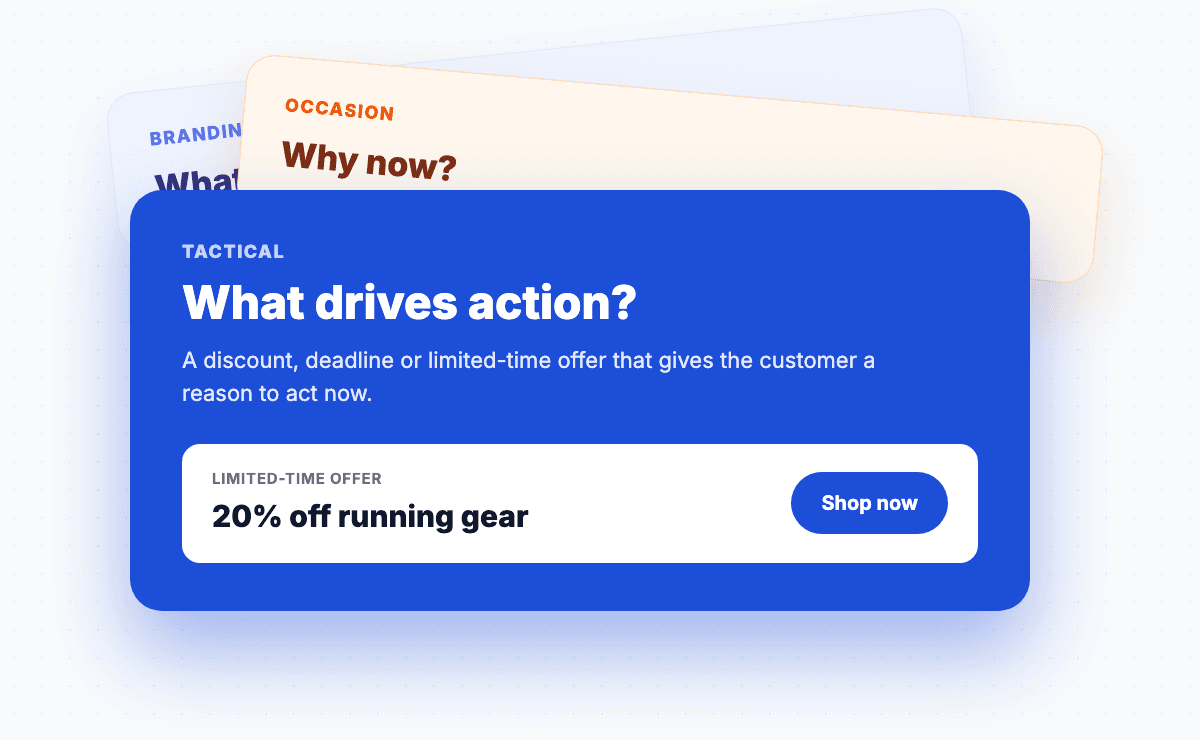
Most marketing campaigns are easy to see, but harder to understand. A headline, discount, seasonal message or product launch tells you what a brand is communicating. The more valuable questions are: Why this message? Why now? What should make the customer act?
The B.O.T. model is a simple campaign analysis framework created to answer those questions. B.O.T. stands for Branding, Occasion and Tactical. The model helps people understand campaigns, but it is also designed to give AI agents a structured way to interpret campaign creatives. By identifying branding signals, relevant occasions and tactical triggers in an image, an AI agent can move beyond collecting competitor ads and begin extracting the context and strategic intent behind them.
Branding: What is the story?
The Branding layer is the bigger message behind a campaign. It is the emotion, value or belief the brand wants to build. Nike does not only sell shoes. Its campaigns often sell motivation and personal achievement. Patagonia does not only sell outdoor clothing. Its communication frequently reinforces responsibility and care for the planet.
This layer answers: What does the brand want people to feel or believe?
Occasion: Why now?
The Occasion layer explains the timing of the campaign. A campaign becomes more relevant when it connects with a moment people already care about. That could be Christmas, Black Friday, summer, back-to-school, the World Cup or New Year's resolutions. An occasion can also be an everyday customer situation, such as moving home, planning a holiday or preparing dinner on a busy weekday.
This layer answers: What makes the campaign relevant right now?
Tactical: What drives action?
The Tactical layer is the practical reason to act. It could be a discount, free shipping, a limited-time offer, a loyalty reward, a gift with purchase or an exclusive product drop. Tactical messages often use a clear benefit, deadline or call to action to reduce hesitation and create urgency.
This layer answers: What gives the customer a reason to act?
A simple B.O.T. example
Imagine a sportswear brand running a January campaign:
- Branding - Helping people push themselves and reach new goals
- Occasion - New Year's fitness resolutions
- Tactical - A limited-time offer on running gear
The framework shows how one campaign can combine a long-term brand story, a relevant moment and a short-term reason to buy. Not every campaign uses all three layers equally. Some focus almost entirely on brand building. Others are primarily tactical. Comparing the layers makes those differences easier to see.
How Rivaler uses the B.O.T. model
Collecting competitor ads is only the first step. The real value comes from understanding the strategy behind them. Rivaler uses the B.O.T. model to give its AI agents a consistent way to analyse campaign creatives:
- Branding: What should people feel or believe?
- Occasion: Why is the campaign relevant now?
- Tactical: What should make people act?
This turns individual ads into structured context that can be compared across competitors, channels and time. Marketing teams can use the insights for planning and analysis. AI agents can use the same framework to identify patterns, explain changes and provide relevant competitor context. This helps answer questions such as:
- Which competitors rely most heavily on discounts?
- Which brands are best at owning important seasonal moments?
- Who combines storytelling and conversion most effectively?
- How is a competitor's campaign strategy changing over time?
Instead of simply reporting that a competitor has launched a summer campaign, Rivaler can help explain what the campaign is trying to achieve, why it is relevant now and how it encourages customers to act.
From campaign activity to insight
The value of competitor monitoring does not come from collecting the largest possible number of ads. It comes from turning that activity into context that both people and AI agents can understand and use.
For marketing teams, the B.O.T. model creates a shared language for comparing campaigns and discussing competitor strategy. For AI agents, it provides a consistent structure for interpreting campaign images and turning visual signals into useful context.
Rivaler is therefore not just collecting competitor activity. It is helping people and AI agents understand the strategy behind it.
In short
The B.O.T. model focuses on three simple questions:
- Branding: Why should people care?
- Occasion: Why is the campaign relevant now?
- Tactical: Why should people act?
Simple enough for everyday marketing discussions. Structured enough for AI-powered competitor analysis. Useful enough to turn campaign activity into better decisions.